Operations as Sustainability Infrastructure
Module Overview
This module considers operations as the practical infrastructure through which sustainability is realised in performance arts organisations. It reflects on how environmental impact is shaped less by isolated actions and more by the systems, routines, and patterns that structure everyday work. Buildings, technical systems, workshops, transport, and maintenance practices are treated as sites where sustainability either becomes part of normal practice or is quietly excluded.
The module is intended for those responsible for operational planning and delivery, as well as leaders whose decisions shape operational conditions. It focuses on visibility, coordination, and repeatability, and on how operational culture and systems influence environmental outcomes over time.
🎯 Module Aims
This module aims to:
- Examine operations as a form of sustainability infrastructure within performance arts organisations
- Explore how everyday systems and routines shape long-term environmental impact
- Consider the relationship between operational culture, leadership, and sustainable practice
🏆 Learning Outcomes
On completion of this module, participants should be able to:
- Analyse how operational systems and routines influence sustainability outcomes
- Identify key points where buildings, energy, materials, and mobility shape environmental impact
- Assess how visibility, coordination, and planning affect operational sustainability
- Recognise the role of organisational culture and constraints in sustaining or limiting change
- Translate sustainability intentions into practical, system-level operational decisions
Introduction
In art performance organisations, sustainability is often discussed through plans, policies, or artistic intentions. You will have seen plenty of these in different forms. Practical experience shows that real change happens when operations are involved. What actually makes a difference is how buildings are run, how equipment is used, how workshops function, and how maintenance and schedules are organised. Most importantly, sustainability is carried out by the people doing this work every day: those involved in production, building management, front-of-house, cleaning, technical teams. When these roles can see themselves reflected in sustainability efforts, it moves from an abstract goal to a shared, operational reality.
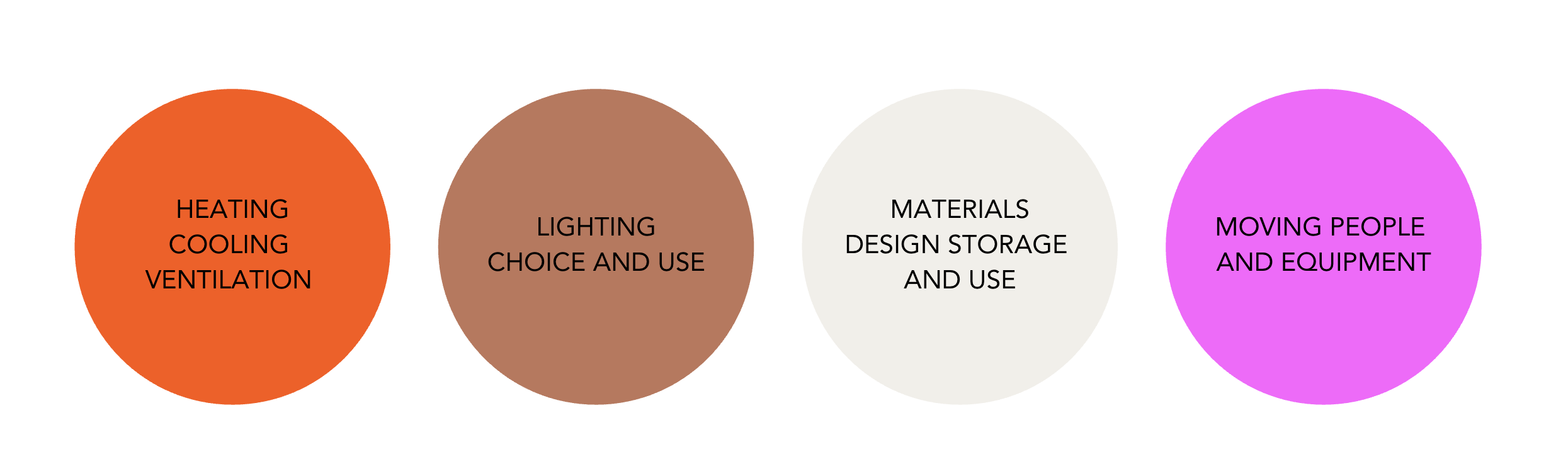
Environmental impact is shaped less by what happens once and more by what is repeated every day. Operations are where sustainability either becomes part of normal practice or is quietly left out. In practice, this work shows up in a small number of everyday operational areas that shape daily routines:
Taken together, these activities form patterns. And as you know, these patterns often last longer than individual projects, staff members, or leadership changes.
For this reason, operations can be understood as sustainability infrastructure.
Operational sustainability is often described as a technical problem. Technical knowledge matters, and operations teams already use it every day to make performances, exhibitions, and public programmes possible. But the main challenge is usually not technology. It is the systems and routines that have built up over time. High energy use, material waste, or unnecessary transport are rarely intentional. They are more often the result of inherited ways of working that prioritise speed, certainty, or “how things have always been done”. Changing outcomes means paying attention to how decisions are made, repeated, and normalised across productions and seasons.
Operations teams sit at a critical point in cultural organisations. They turn artistic ideas into physical reality and keep buildings, stages, and public spaces functioning. They also deal with the consequences of decisions made earlier in planning, design, and programming. This does not mean operations teams are solely responsible for sustainability. It does mean their experience is essential. When operational realities are not visible to leadership, sustainability risks becoming theoretical and difficult to deliver in practice.
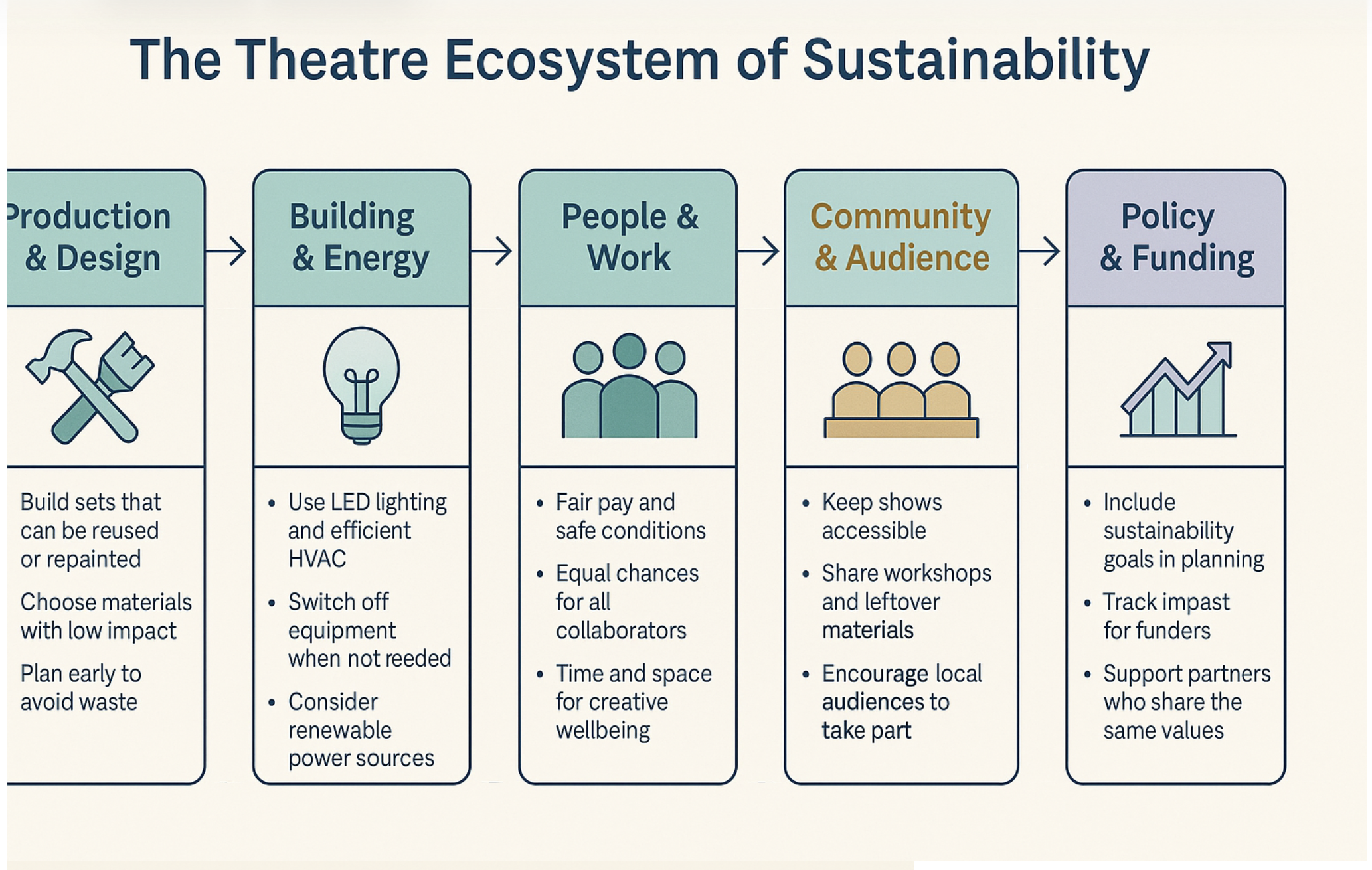
Well-run operations also make organisations more resilient. Inefficient systems increase costs, reduce flexibility, and create problems when pressure is high. Sustainable systems tend to do the opposite. They make costs more predictable, reduce stress on teams, and give organisations more control over how they operate. Over time, this makes it easier to respond when conditions change.
Sustainable operations depend on visibility. People need to see where energy, materials, and time are actually being used, which everyday routines have the biggest impacts, and how systems interact over time. This knowledge has to be built into daily work, not added as an extra task. Monitoring and data are useful only when they help people understand the consequences of decisions, learn from experience, and change habits that no longer serve the organisation.
To keep work consistent over time, focus on systems rather than individual effort. When sustainable practices are built into everyday tools, workflows, and routines, they happen naturally and are repeated without added pressure. This supports better decisions and keeps sustainability integrated into daily operations rather than treated as an extra task.
- Which operational routines in your organisation are repeated most often?
- Where do sustainability outcomes rely on individual workarounds?
- Which operational systems have the greatest influence on long-term impact?
STRATEGIC CONSIDERATIONS
- Operations stabilise behaviour over time.
- Sustainability succeeds through systems, not individual heroics.
- Visibility is a prerequisite for change.
- In your organisation, in what ways do operations function as sustainability infrastructure?
- Which repeated routines in your day-to-day work have the biggest environmental impact?
- Where does visibility — or lack of it — affect sustainability outcomes in your organisation?
Buildings, Energy & Material Systems
In cultural organisations, the biggest environmental impacts rarely come from single decisions. You will recognise this from experience. Most impacts are built into buildings, technical systems, and production processes long before sustainability is discussed. Energy use, material demand, and waste are shaped by how spaces are laid out, how systems are specified, and when key decisions are made.
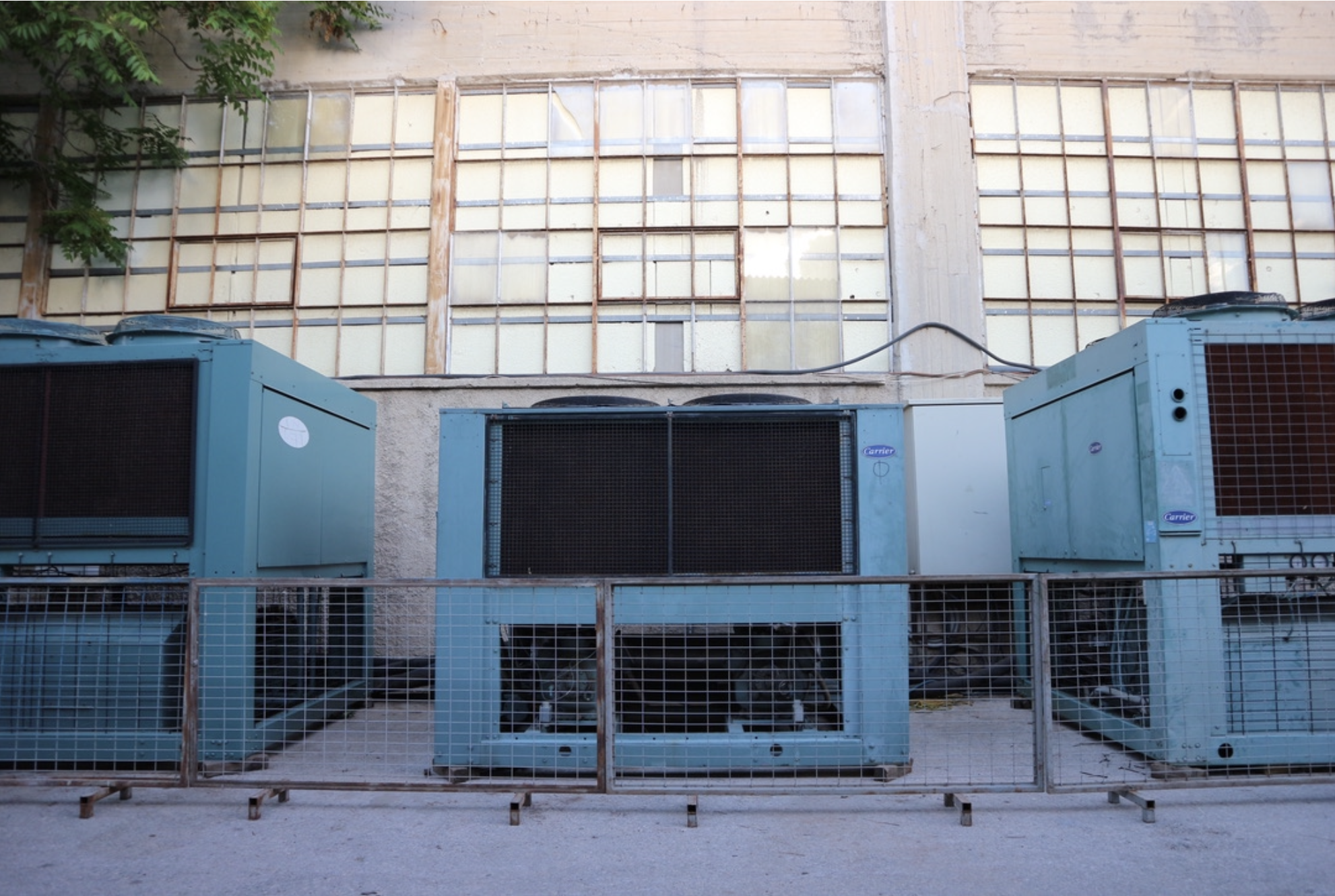
Buildings are one of the most important sources of environmental impact in cultural organisations. Heating, cooling, ventilation, and lighting systems are usually designed for peak moments rather than everyday use. When they run continuously, or in the same way across all spaces, inefficiency becomes routine. A key shift in sustainable practice is recognising that buildings do not use energy on their own. Energy use is shaped by how people operate spaces, schedule activities, and use technical systems day to day.
Lighting
Lighting systems make this easy to see. Many organisations have moved from tungsten to LED, reducing energy use and heat. But you will also know that the benefits depend on how systems are run. Over-lighting, long standby times, and poor coordination between teams can quickly cancel out efficiency gains. Technology helps, but planning and daily practice decide the outcome. Refer to the Sustainable Culture Toolkit pg11-12 for practical guidance and examples
Heating, Ventilation, Air Conditioning
HVAC systems work in much the same way. Zoning, scheduling, seasonal changes, and using natural ventilation can all significantly reduce energy use. But these only work when teams are aligned: from a sustainability perspective how these systems are operates (setpoints, schedules, maintenance, coordination with technical and front-of-house-teams) often has a greater impact thank the system type itself. Technical, facilities, and production staff need to be working from the same assumptions. When communication breaks down, systems default to running at full capacity.
Design and Materials
Material systems are just as influential. Workshops turn raw materials into sets, props, and costumes — and they also concentrate environmental impact. Under pressure, procurement often prioritises speed, cost, or what is familiar. Lower-impact options like certified timber, water-based paints, recycled materials, or modular builds are already known to many teams. Their success depends less on availability and more on being considered early enough.
Designing for reuse and disassembly is one of the most effective sustainability strategies performance art organisations have. Sets and costumes that can be adapted, stored, or repurposed reduce future demand and waste. This only works when sustainability is part of the design conversation from the start, not something added once construction begins.
Everyday workshop practices reinforce these outcomes. Regular tool maintenance extends equipment life and improves safety. Clear storage reduces duplication and waste. Working with local suppliers shortens supply chains and builds resilience. Many of these practices save time and money as well as reducing environmental impact — something operations teams already understand well.
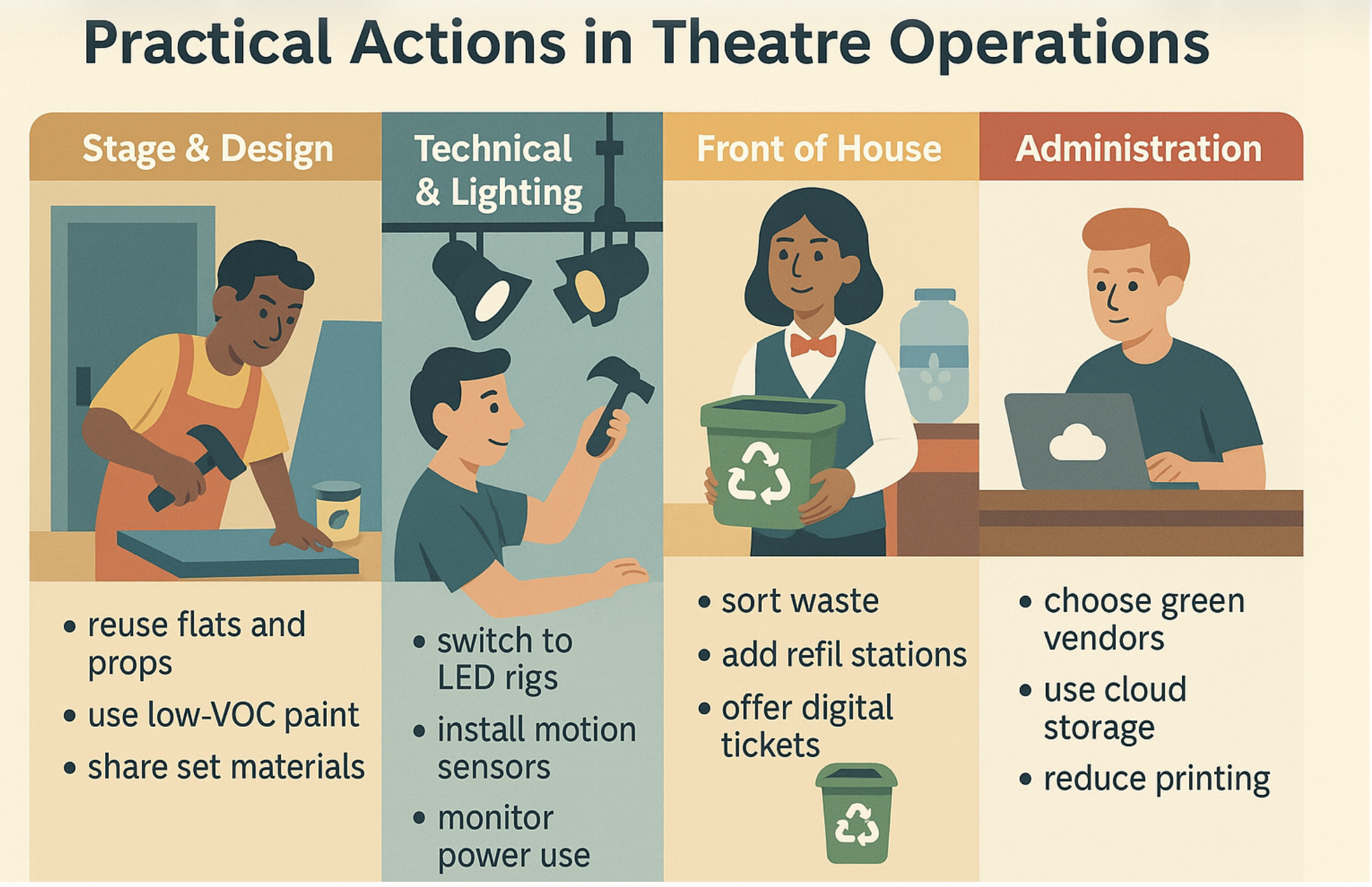
Sustainable building and material systems do not limit artistic ambition. They sharpen it. When constraints are clear early on, teams can design within them instead of fixing problems later. This usually leads to better results, not weaker ones.
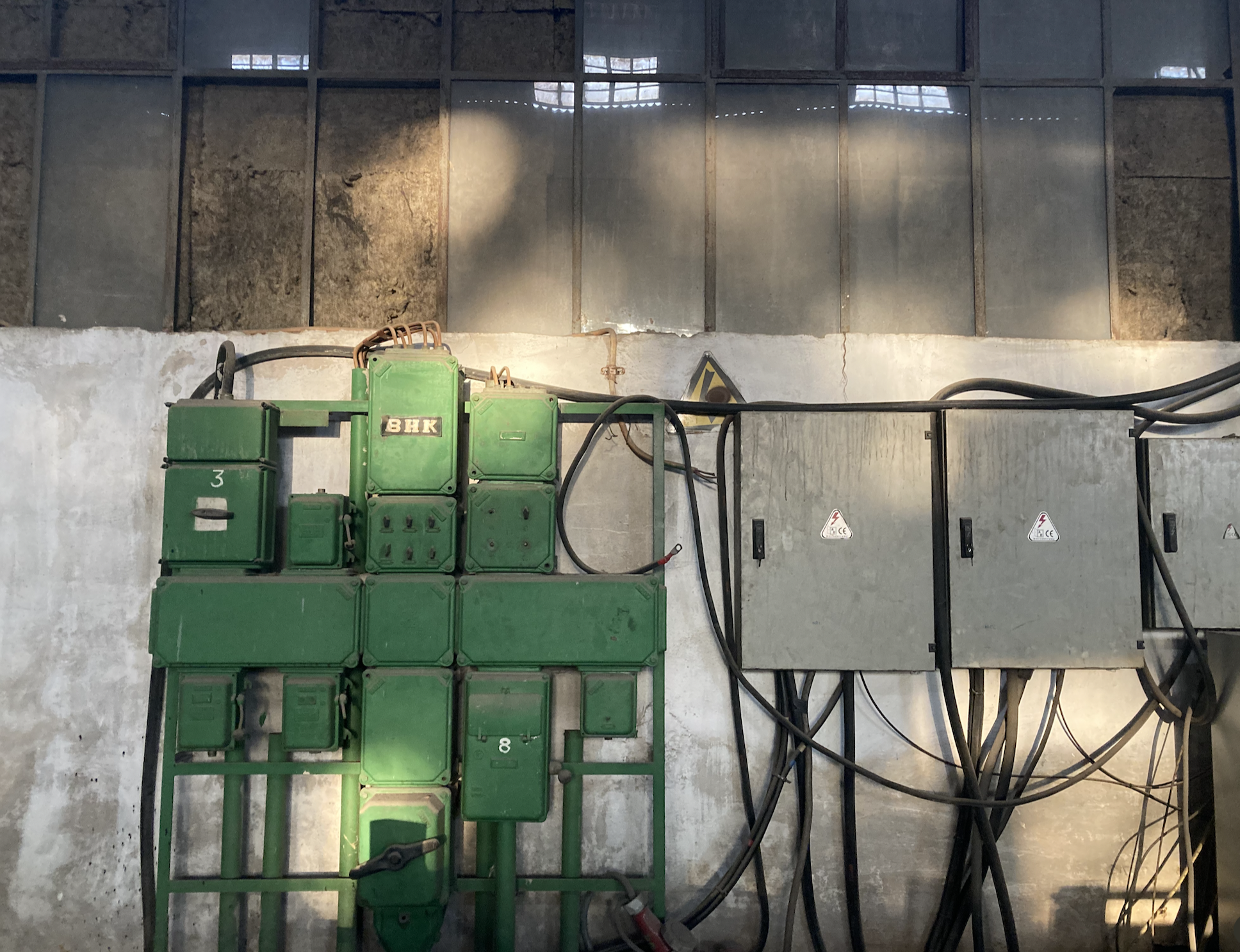
The most effective sustainability decisions are made before systems are fully locked in.
Operational Systems And Impact
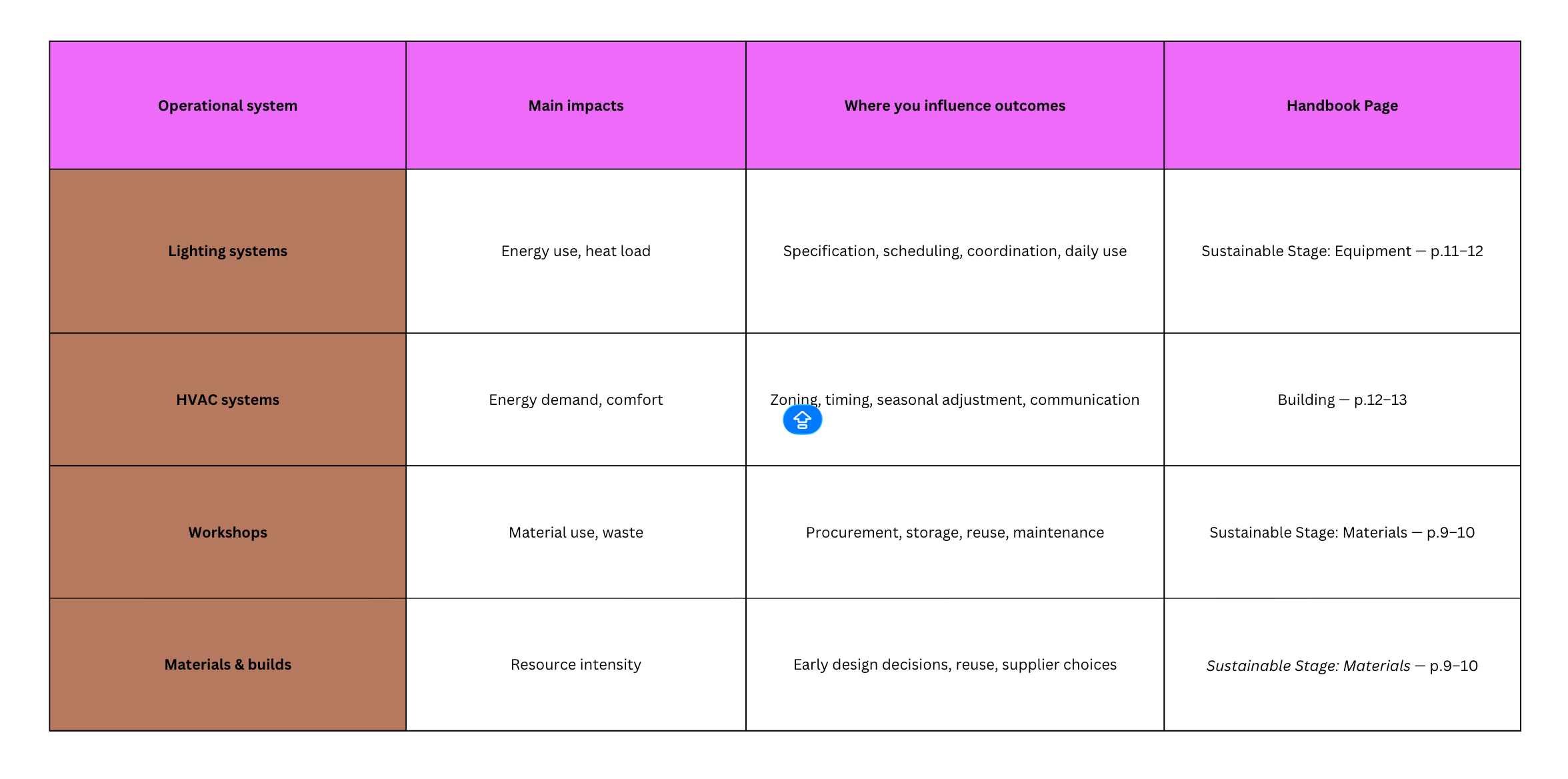
The table below maps key operational systems to their main environmental impacts and points of influence. Each row also points to the Sustainable Culture Toolkit handbook pages with practical guidance you can revisit.
STRATEGIC CONSIDERATIONS
- Buildings express organisational priorities through how they are used.
- Early decisions shape long-term impacts.
- Coordination enables sustainability without reducing quality.
- In your organisation, how do planning and daily use shape energy efficiency alongside technology?
- Where have reuse or disassembly already reduced material impact in your work?
- What makes workshops such a critical point for sustainability outcomes in your organisation?
Circular Practice, Mobility & Organisational Footprint
An organisation’s environmental footprint does not stop at the building door. Waste, transport, and supply chains link performance art organisations to wider material and social systems. You already work with these connections every day. Often they are managed reactively, but their impact is usually shaped by decisions made much earlier — at planning and operational stages.
Waste
Waste is rarely just a disposal problem. In practice, it is the result of decisions about design, quantities, storage, and responsibility. When materials reach the end of a production with no clear plan, disposal becomes the default. Circular practice shifts this logic. It treats waste as a planning issue, not something unavoidable at the end.
The waste hierarchy — Reduce, Reuse, Recycle, Recover — reflects this approach. Prevention comes first. Reduction depends on realistic quantities and durable design. Reuse relies on storage, documentation, and networks that allow materials to move between projects. Recycling and recovery still matter, but they deal with consequences rather than causes. Refer to the Sustainable Culture Toolkit pg5-7 for practical guidance and examples and pg9-12 for tips on materials and equipment use
Transport
Transport and logistics show similar patterns. Touring schedules, delivery routes, and staff travel choices shape emissions long before anything moves. When time pressure takes over, coordination often gives way to convenience. Costs rise, and so does impact. Sustainable mobility starts with planning routes together, consolidating loads, and thinking geographically rather than one job at a time.
International touring adds another layer of complexity. Not all travel can be avoided, and that reality is understood. What matters is that its environmental cost is recognised and recorded. Tracking transport emissions does not dictate artistic choices. It simply brings accountability into decision-making and allows scale, frequency, and mitigation to be considered more deliberately.Refer to the Sustainable Culture Toolkit pg13 for practical guidance related to travel and transport
What do these have to do with the SDGs?
These operational choices connect directly to the performance art organisations’ role as a civic organisation. Managing resources responsibly supports wider sustainability goals, including the UN Sustainable Development Goals (SDGs). Reducing waste and reusing materials aligns with SDG 12: Responsible Consumption and Production. Energy-aware buildings and transport planning support SDG 11: Sustainable Cities and Communities and SDG 13: Climate Action. You can revisit Module 1 (link) for more information about the SDGs.
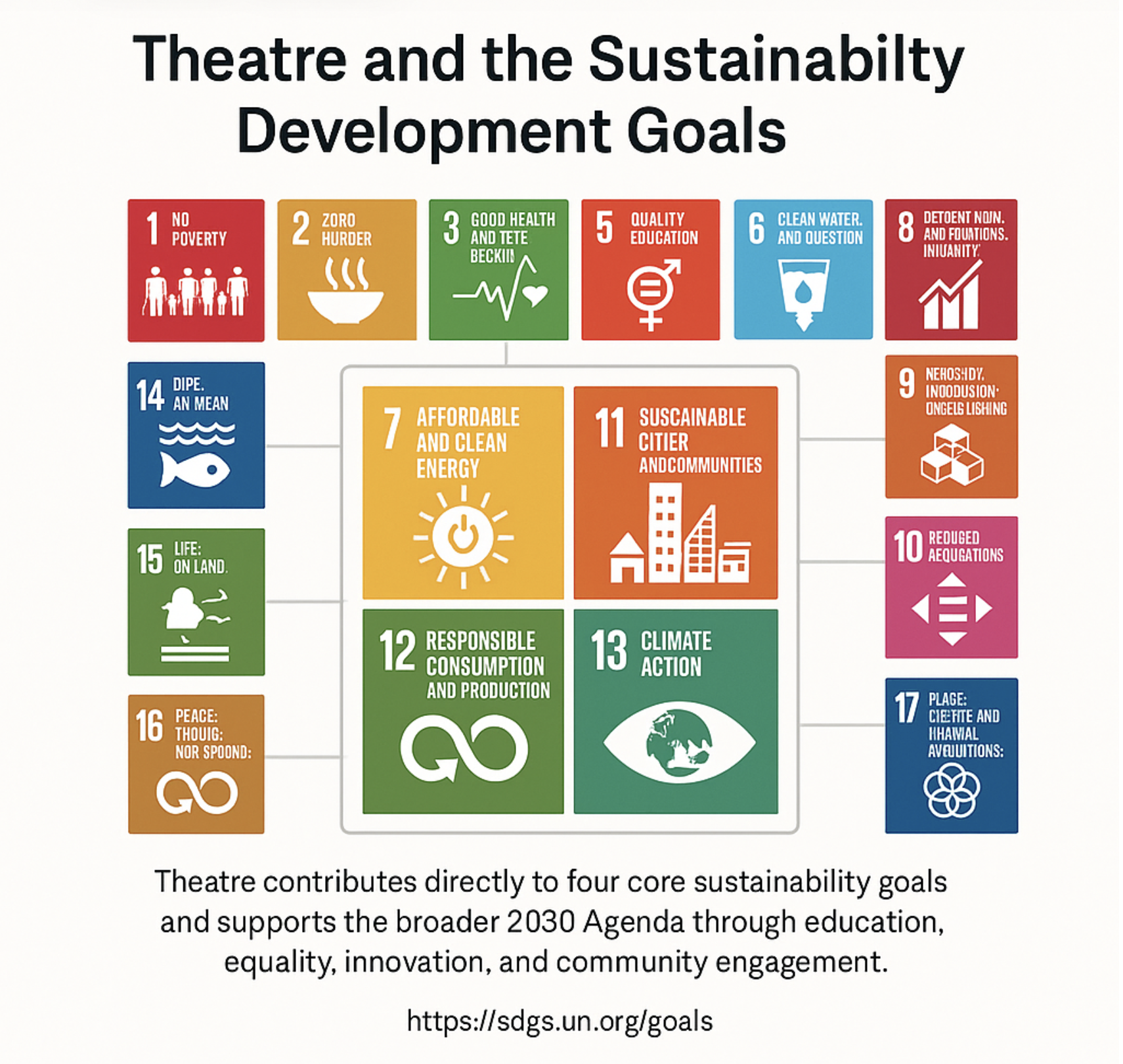
The SDGs are not targets to be added on top of your work. They provide a shared language for impact that already exists. Operations teams contribute to these goals through everyday decisions. Making this connection visible strengthens internal clarity and external credibility.
Most environmental impact is decided before materials or people start moving.
- Which waste streams are hardest to manage in your organisation?
- Where does time pressure lead to inefficient transport or logistics?
- Which operational choices most clearly show your organisation’s role in the wider community?
STRATEGIC CONSIDERATIONS
- Circular practice starts with early responsibility.
- Mobility outcomes are shaped by coordination, not intention.
- The SDGs help name impact that already exists.
- In your organisation, how do planning and daily use shape waste outcomes?
- Where does transport planning have the biggest effect on emissions?
- How do the SDGs connect to decisions you already influence?
Culture, Constraints & Operational Leadership
Sustainability in performance art organisations operations is held in place not only by systems, but by culture. Organisational culture shows up in daily behaviour: how fast decisions are made, what gets prioritised under pressure, and which limits are treated as flexible. When these patterns stay the same, sustainability struggles to move from intention into routine practice.
Operational culture often values speed, responsiveness, and problem-solving. These qualities are essential. But when speed consistently overrides reflection, unsustainable patterns can become normal. In these situations, sustainability can feel like extra work rather than part of how things are done.
Constraints shape behaviour more than values do. When expectations around energy use, materials, or timelines are unclear, teams fall back on familiar solutions. Clear operational frameworks make constraints visible and predictable. This reduces friction and supports both sustainability and artistic ambition.
Leadership in operations is shown through systems, not statements. Adjusting planning cycles, clarifying who decides what, and modelling sustainable practice influence behaviour more effectively than policies alone. When sustainability is built into how work is organised, it becomes easier to repeat — even under pressure.
The idea that sustainability limits creativity often comes from resistance to changing habits, not from real loss of freedom. Performance art centers and organisations have always worked within constraints. Sustainable operations refine those constraints so they better reflect environmental and organisational reality.
Operations leaders play a key role in this shift. By making sustainability part of professional practice — rather than something extra — they support continuity, learning, and resilience. Over time, sustainability becomes less visible as a separate issue and more present as a shared way of working.
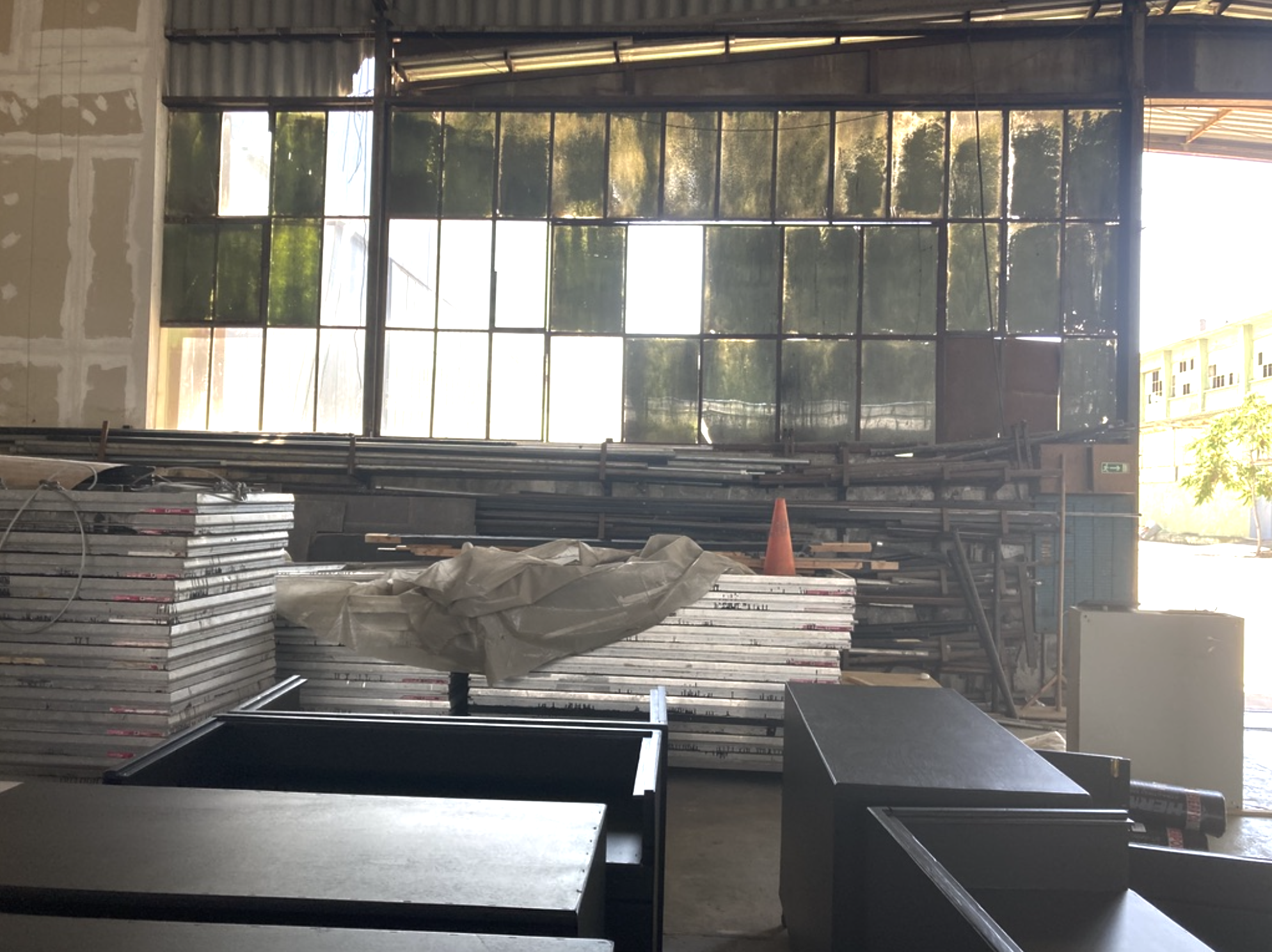
Culture changes when systems change, not when intentions are announced.
Respond to the statement: “Operational sustainability limits artistic freedom.”
Consider:
- The role of constraints in creative work
- How operational clarity can support ambition
- Where resistance may come from habit rather than necessity
STRATEGIC CONSIDERATIONS
- Behaviour follows systems.
- Clear constraints reduce resistance.
- Leadership is exercised through structure.
- How does sustainability function as a cultural practice in your organisation?
- Where does operational clarity help creative work rather than restrict it?
- Why do systems shape behaviour more effectively than declarations?
FINAL TASK — Operational Sustainability Action Plan
Learning only matters if it leads to decisions. This task is not about proving understanding. It is about committing to change at an operational level. You will now create a short Operational Sustainability Action Plan focused on embedding sustainability into everyday systems, not adding another responsibility.
This is not a proposal or a wish list. It is a practical decision framework.
Write a brief action plan that:
1. States your operational sustainability intention
Describe the future condition you are working toward.
Focus on how operations will function differently — not on individual projects.
Examples:
- How decisions are planned and timed
- How resources are used repeatedly
- How sustainability becomes part of routine operations
2. Identifies three operational priorities
Choose three high-impact areas from this module, such as:
- Energy use in buildings or technical systems
- Materials and workshop processes
- Waste and end-of-life planning
- Transport, touring, or logistics
- Monitoring and data collection
Explain why these matter most in your context.
3. Names the systems and responsibilities involved
Clarify:
- Which operational systems will change
- Who will maintain them over time
- Where decision authority currently sits — and whether it needs to shift
Avoid placing responsibility on individuals without structural support.
4. Identifies constraints and enabling conditions
Briefly note:
- What may resist change (time pressure, habit, capacity)
- What will support it (planning changes, leadership backing, partnerships)
5. Links your plan to the SDGs
Identify the most relevant SDGs (e.g. 7, 11, 12, 13) and explain how your operational decisions contribute in practice.
important framing
Your plan should focus on:
- Systems, not goodwill
- Repeatable decisions, not exceptional effort
- Operational reality, not aspiration
Once written, this plan represents a professional commitment.
WRAP-UP
Sustainable performance art organisations operations are not achieved through efficiency alone. They are achieved through clarity — clarity about how buildings are used, how materials move, how people travel, and how decisions repeat under pressure.
Operations teams are not delivering sustainability for others. They are shaping the conditions that make it possible. Leadership here is measured not by intention, but by the systems that hold when things get difficult.
By focusing on infrastructure, planning, and culture, this module positions sustainability as part of professional operational practice.
Not an add-on.
Not a burden.
A refinement.
The question is no longer whether your organisation can operate more sustainably.
The question is which operational system you will change first.
Complete the sentence below:
“One operational decision I can influence in the next six months that will measurably reduce my organisation’s environmental impact is…”
Choose something concrete, verifiable, and within your professional reach. Once this statement exists, sustainability is no longer theoretical.
It is operational practice.
Operational Sustainability Action Plan
Your Action Plan Draft (200–250 words max)