Sustainable Performance Art Organisations: An Introduction
A Self-Study Module
Module Overview
This module introduces the concept and practice of sustainable performance organisations, exploring how they can reduce their environmental impact while strengthening social responsibility and long-term resilience. It situates situates art organisation practice within the global sustainability framework of the 2030 Agenda for Sustainable Development and highlights the direct relevance of the UN Sustainable Development Goals (SDGs). Designed for art performance organisation professionals and cultural practitioners professionals and cultural practitioners, the module combines theory with opportunities for reflection and discussion. Learners are invited to consider how sustainability relates to their own organisational context and to develop a practical action plan for future projects.
🎯 Aims
- To raise awareness of the environmental, social, and economic impacts of theatre and cultural production.
- To situate sustainable art performance organisation within the broader international sustainability agenda (Agenda 2030 and the SDGs).
- To encourage reflection on professional practice and the role of cultural organisations as leaders in sustainability.
🏆 Learning Outcomes
At the conclusion of this module, learners will be able to:
- Explain the concept of sustainable art performance organisation and its relevance to Agenda 2030 and selected SDGs.
- Recognise the main environmental impacts of traditional organisation practices and identify alternative sustainable approaches.
- Relate global sustainability goals to their own organisational strategy and professional practice.
- Evaluate tensions between artistic vision, operational needs, and sustainability objectives.
- Produce a short sustainable action plan tailored to their own art performance organisational or cultural organisation.
1. Introduction & Framing
For those of us working in art performance and the wider cultural sector, the idea of sustainability is no longer an abstract discussion but rather a part of our professional reality. Sustainable theatre refers to making creative and operational choices that reduce the environmental impact of productions while ensuring long-term viability for our organisations and communities. It is not about compromising artistic quality, but about rethinking the way we work so that our art can thrive in a world facing ecological and social challenges.
In practice, this connects directly with principles many of us already recognise: reducing, reusing, and recycling materials in workshops and design processes; conserving energy through smarter lighting, HVAC, and stage equipment; cutting transport emissions in production logistics and touring; and minimising waste from set construction, props, costumes, and front-of-house operations. These are not abstract ideas but practical adjustments that most of us have already seen debated in production meetings, budgets, or board discussions.
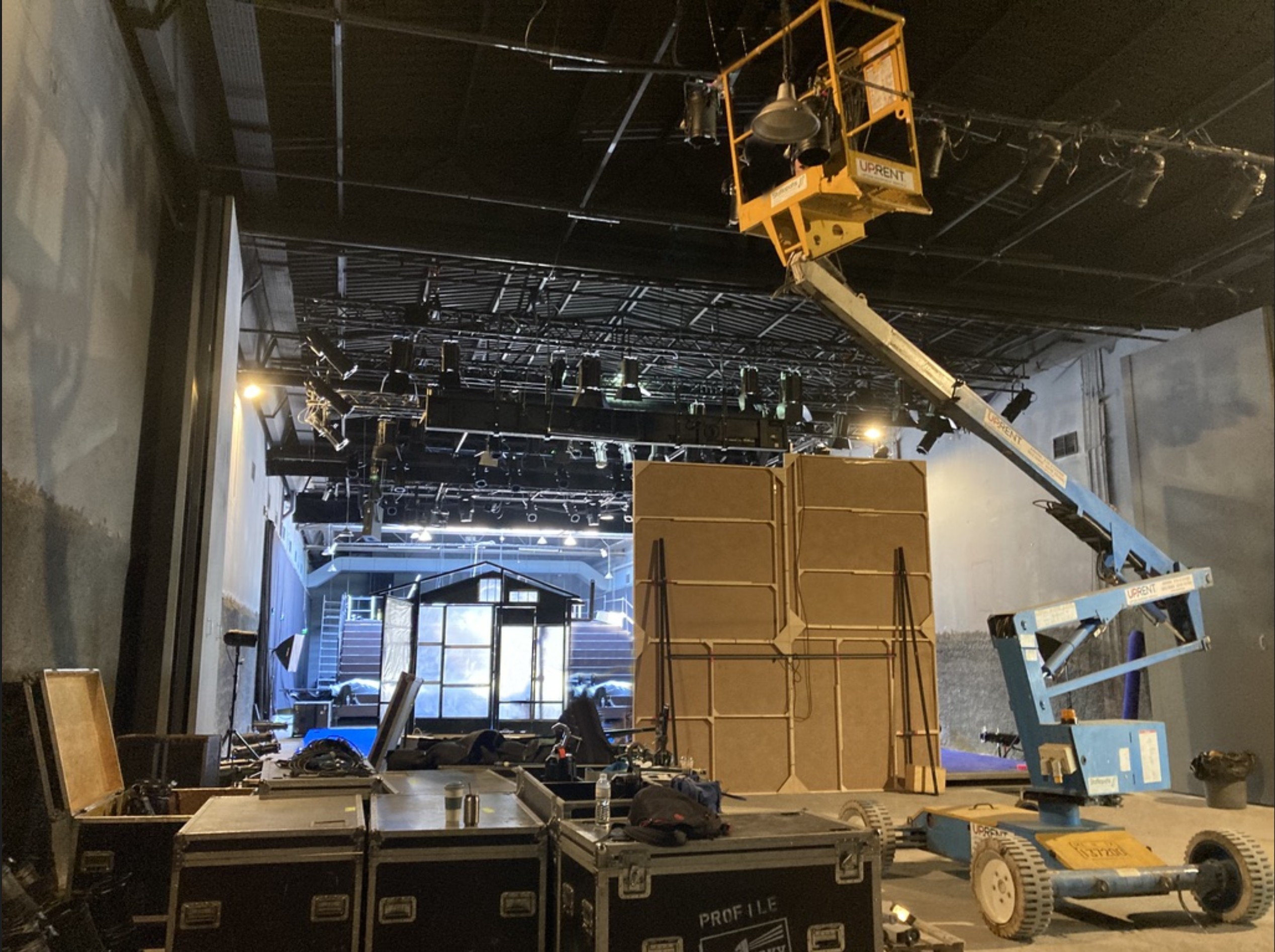
Theatres and generally performance art organisations also have a unique cultural responsibility. As practitioners, we influence not only the audiences who attend our performances, but also the wider networks of suppliers, partners, and funders we work with. By integrating sustainability into our practice, we demonstrate that the performing arts can be at the forefront of positive change, modelling creative and responsible ways of working for society at large.
Sustainability in performance art organisations is not only about environmental management. It also has social and community dimensions that are highly relevant to cultural organisations. Fair working conditions, inclusivity, and accessibility are part of a holistic approach to sustainability. Initiatives such as community-based costume exchanges, donations of surplus materials, or educational workshops on eco-design strengthen the bond between theatres and their audiences. In this sense, sustainable theatre is about building resilient cultural ecosystems — organisations that care for their people and communities while also reducing their environmental footprint.
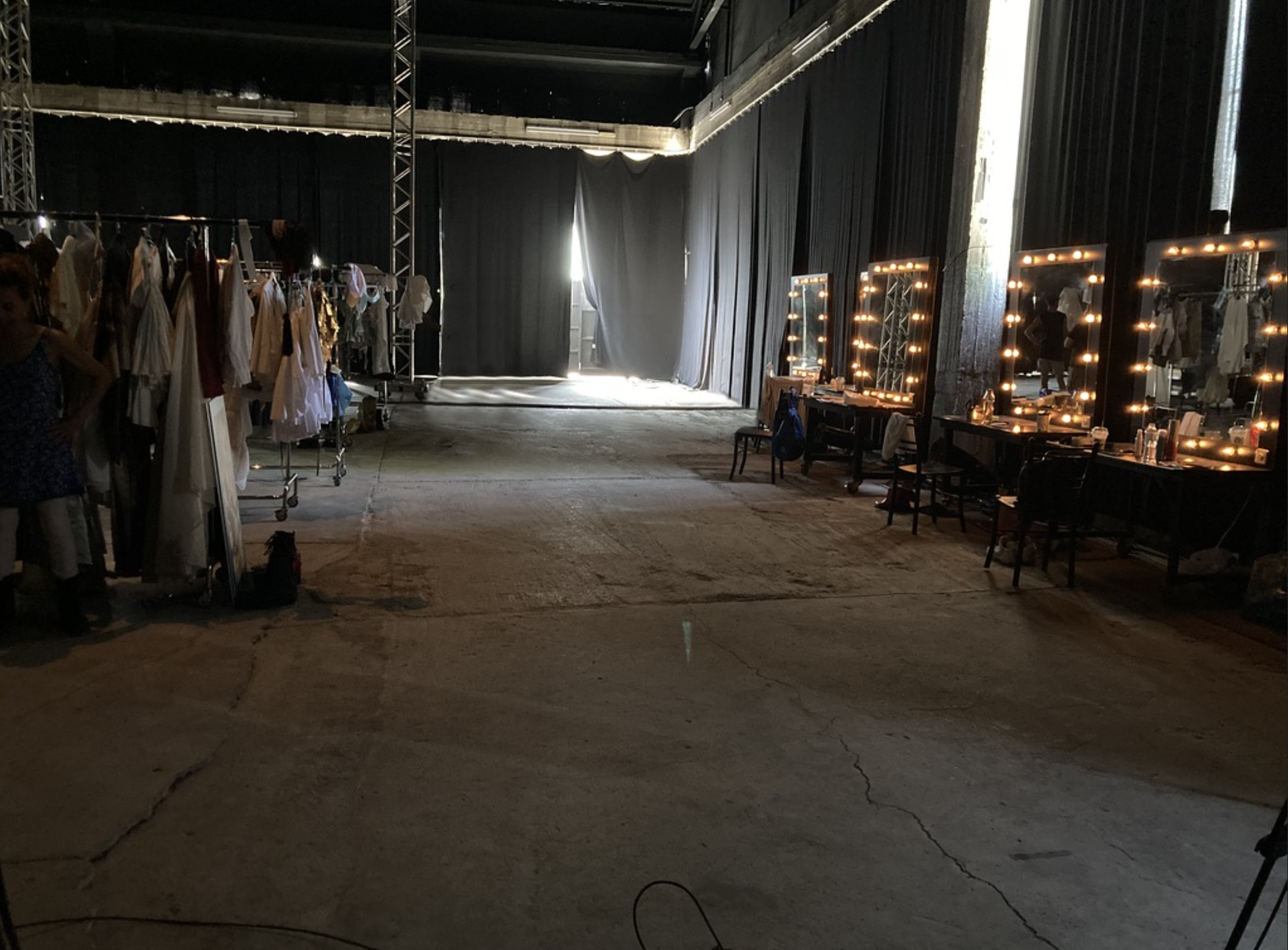
Pause and consider:
- Where in your own theatre or organisation do you see the most obvious sources of waste or inefficiency?
- How might sustainability goals conflict with artistic or operational goals in your work — and how could you balance them?
- What role do you think your organisation could play as a local leader in promoting sustainability beyond the walls of the theatre?
Take 5–10 minutes to write your reflections. If you are studying with colleagues, share and compare your answers. If you are studying alone, keep your notes to revisit later in the module.
2. Theoretical Foundations
Traditional theatre practices can carry a heavy environmental footprint. Sets are often built quickly and discarded just as quickly, resulting in significant material waste. Lighting rigs and HVAC systems are energy-intensive, driving up both operational costs and carbon emissions. Touring companies may transport tons of equipment across long distances, with associated fuel use and emissions. Even catering and front-of-house operations contribute to waste streams through single-use plastics, food waste, and excessive printing of promotional materials.
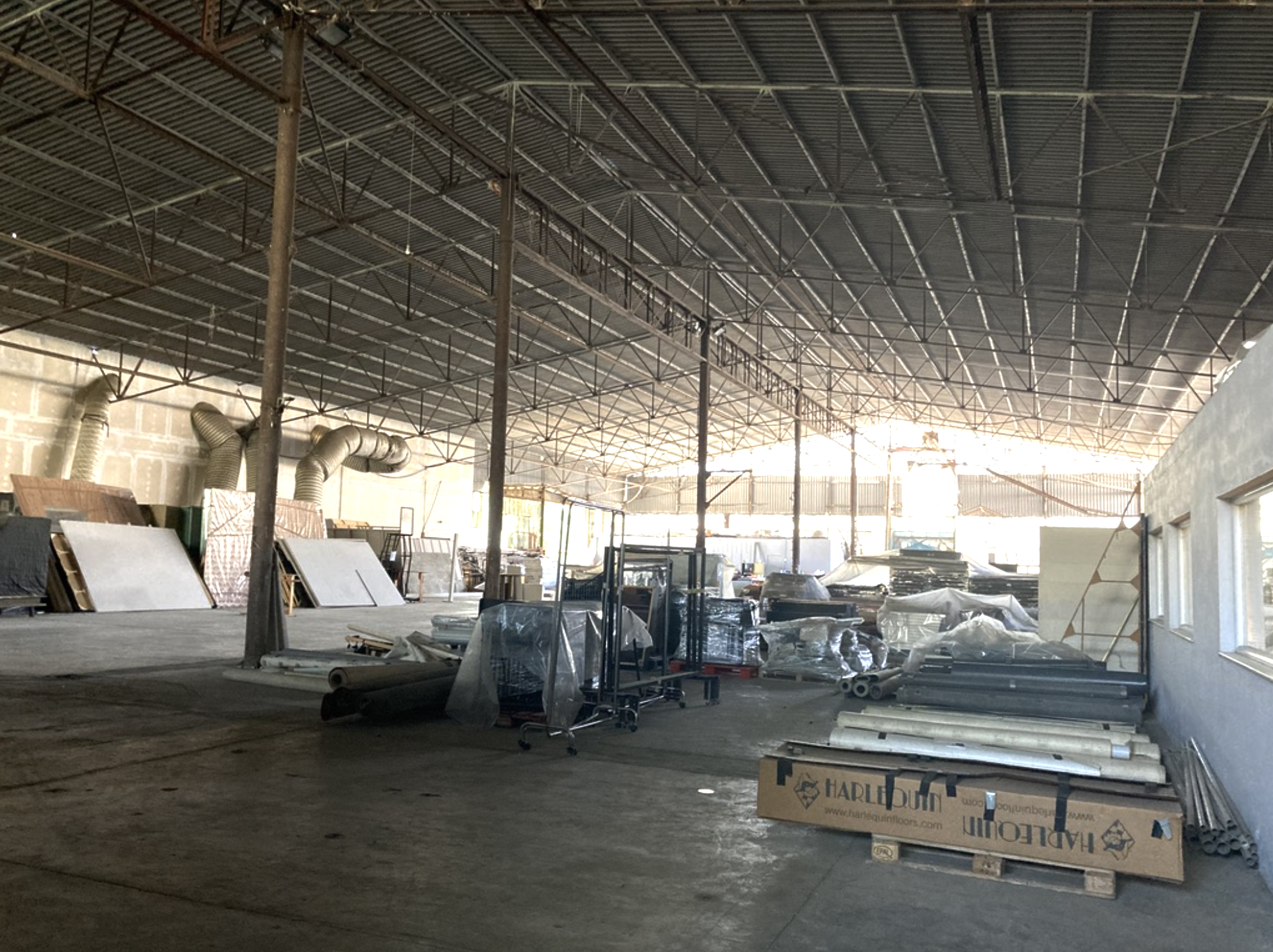
Sustainable performance art organisation aims to reverse these impacts by embedding principles of environmental responsibility into every stage of production. Energy can be conserved by moving to LED lighting and ensuring efficient HVAC use. Materials can be chosen more carefully, prioritising FSC-certified timber and recycled fabrics. Waste can be prevented by building sets designed for reuse or repurposing. Carbon can be tracked and reduced using professional tools.
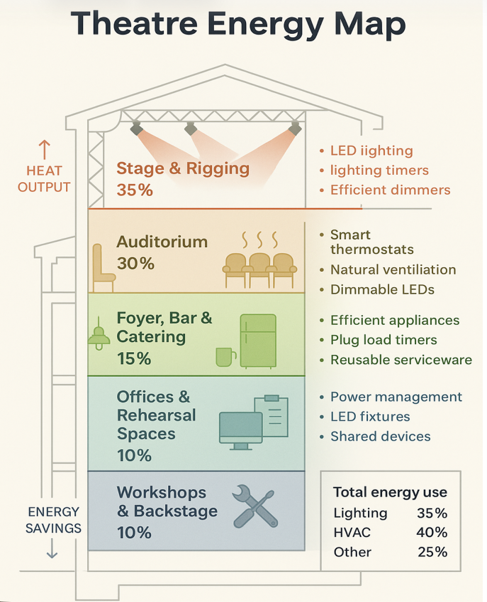
Click the markers to explore extra insights and pick one low-risk action to test this month.
For those of us who know these spaces well, this map reflects the familiar amount of energy within our (mainly indoor) spaces — some essential, some quietly wasted, all worth noticing.
The importance of sustainable practice is recognised internationally. The Broadway Green Alliance in the United States has made significant strides in promoting recycling, energy efficiency, and eco-friendly set construction. Across Europe, the Sustainable Stages initiative has encouraged theatres to rethink touring models, share materials, and conduct energy audits. At the grassroots level, many community theatres are experimenting with materials libraries, costume exchanges, and partnerships with local recycling schemes.
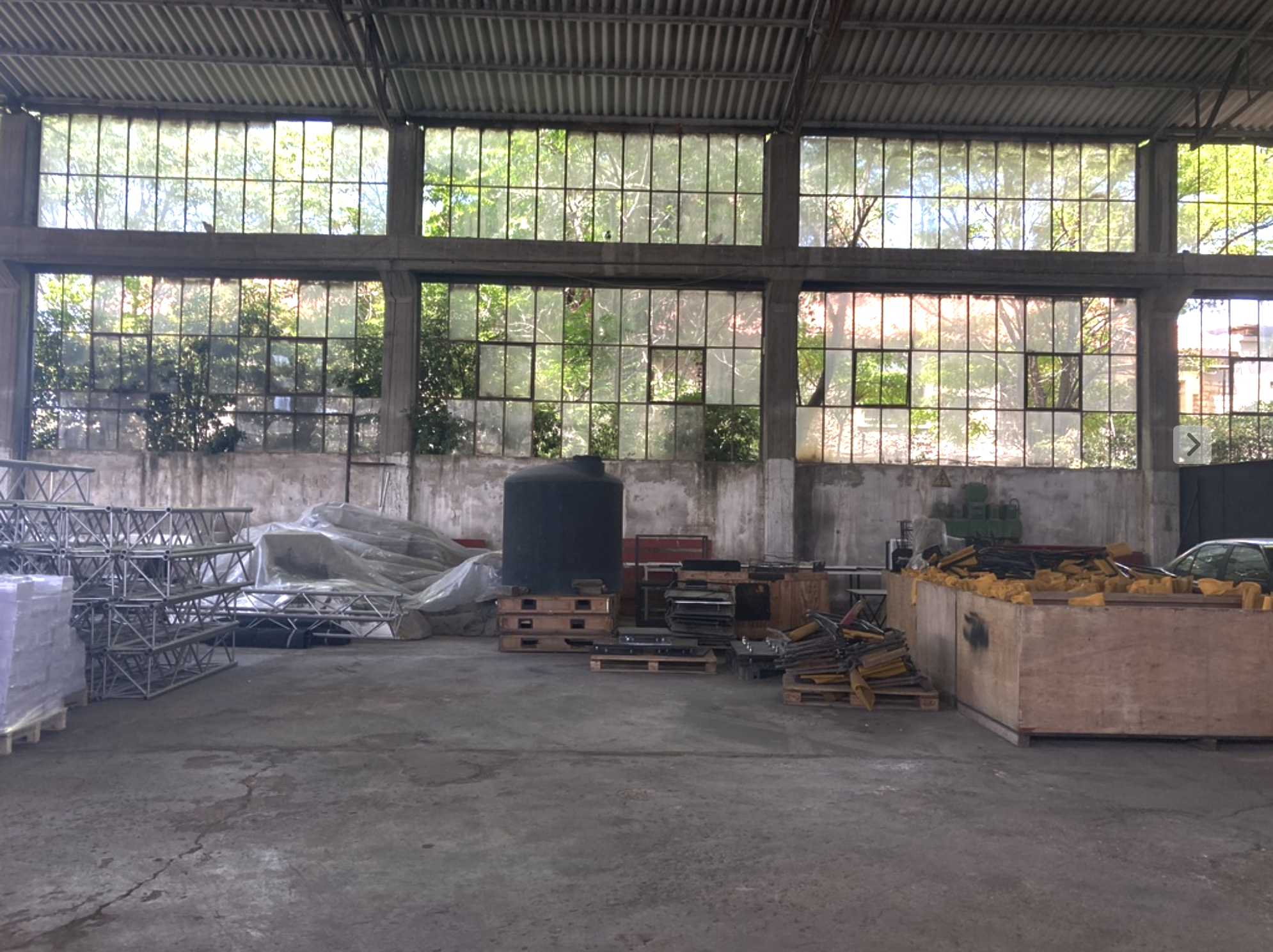
Think about your own organisation or one you know well:
- What is one area where you feel progress toward sustainability has already been made?
- Where do you see the biggest barriers — and why do those barriers exist?
- Which of the international or grassroots examples could inspire your theatre to make changes?
Spend a few minutes noting your answers.
3. Sustainable Theatre and the Global Agenda
The urgency of sustainable theatre cannot be understood in isolation from the 2030 Agenda for Sustainable Development, adopted by all United Nations Member States in 2015. This global framework provides a shared vision for people, planet, and prosperity, expressed through 17 Sustainable Development Goals (SDGs) that guide international action until 2030.
Learn more about the 2030 Agenda for Sustainable Development — the global framework guiding sustainability efforts across all sectors, including culture and the arts.
Visit UN 2030 Agenda →
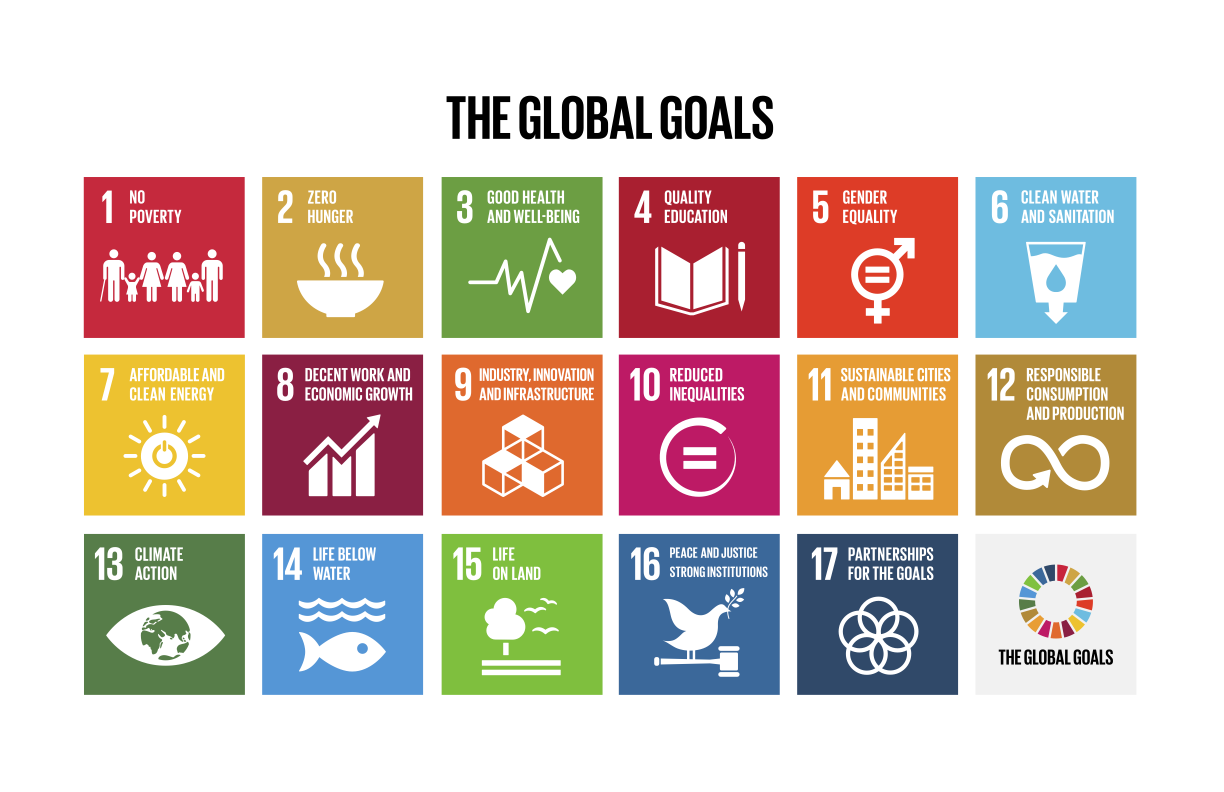
Theatre and cultural organisations contribute directly to several of these goals:
SDG 7: Affordable and Clean Energy → Theatres often occupy older, energy-intensive buildings. By moving to LED lighting, investing in energy-efficient HVAC, and considering renewable energy, theatres can directly contribute to this goal.
View Goal 7 →
SDG 11: Sustainable Cities and Communities → Cultural institutions are anchor points in urban life. A theatre that reduces its footprint, manages waste responsibly, and engages its community in sustainability becomes a model for the wider city.
View Goal 11 →
SDG 12: Responsible Consumption and Production → Traditional theatre often involves short-lived set builds, costume waste, and single-use materials. By reusing, repurposing, and recycling, theatres embody more sustainable consumption models.
View Goal 12 →
SDG 13: Climate Action → Touring productions, transport of equipment, and high fuel use all contribute to emissions. By rethinking touring models, reducing travel, or offsetting emissions, theatres can play a role in the global effort against climate change.
View Goal 13 →It is important to note that other SDGs may also be relevant depending on the size and nature of the organisation.
Have a look at the examples
Swipe on mobile or tap the numbers.

By aligning with the SDGs, art performance and cultural organisations show they are not peripheral to sustainability but integral to it. This alignment also enhances credibility when applying for funding, building partnerships, and engaging policymakers.
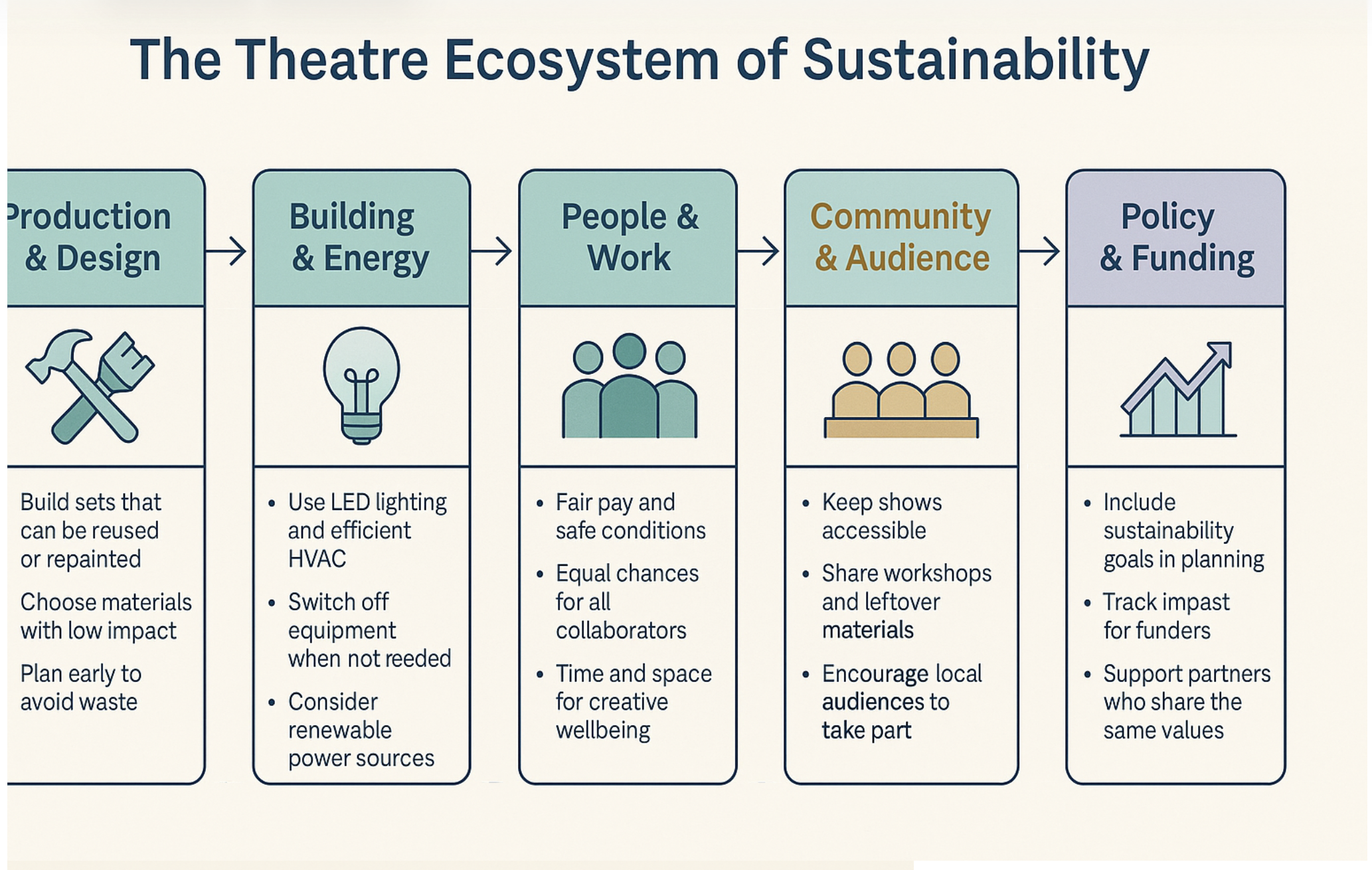
Thinking in these terms, sustainability in art performance organisations is something we’re already part of — a living ecosystem shaped by everyday decisions.
Whether through production choices, building management, audience work, or policy planning, each action contributes to a larger impact.
In the next modules, we’ll reflect on how these areas connect and how our existing practices can continue to evolve.
Take 10–15 minutes for this exercise:
- Which of the four highlighted SDGs (7, 11, 12, 13) do you think your organisation is already contributing to? Provide one concrete example.
- Which of these goals feels most challenging for your organisation, and why?
- Visit the UN Sustainable Development Goals overview: https://sdgs.un.org/goals. Read through all 17 SDGs and identify one additional goal that could align with your organisation’s strategy, depending on your size, scope, and mission. How might your work support this goal?
4. Extended Discussion & Debate
In professional practice, there is often a perceived tension between artistic vision and sustainability goals. Directors and designers may argue that their creative ideas require materials, effects, or technical solutions that are not always environmentally responsible. At the same time, production managers and funders may see sustainability as essential for long-term viability.
Debating these issues openly helps us to clarify values and priorities. Reflect on the following motion: “Artistic vision should always take precedence over sustainability concerns in theatre.” Do you agree or disagree? Consider examples from your own experience where artistic and environmental concerns either clashed or worked together productively.
Take 10 minutes to write a short response:
- Do you believe sustainability should ever limit artistic choices?
- How might creative thinking actually expand when sustainability is treated as a design challenge rather than a constraint?
5. Knowledge Check – Quiz
Choose your answers, then press Submit. You’ll see your score and feedback at the end.
6. Wrap-Up & Personal Commitment
Sustainability in art performance organisations is about creativity, responsibility, and leadership. It is not about limiting artistic ambition, but about embedding environmental and social responsibility into the way we work. By rethinking materials, energy, travel, and community relationships, theatres can play a leading role in shaping a more sustainable cultural landscape.
Write a 200-word Sustainable Action Plan for your next art organisation project. Include at least one environmental, one social, and one economic consideration.